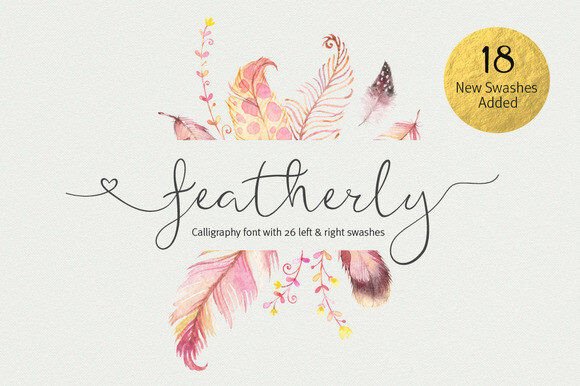
Featherly: A Handmade Font for Elegant, Swash-Loving Designers
There's a particular kind of font that doesn't just sit on a page—it performs. Featherly is one of those typefaces. It's a hand-drawn, modern calligraphic font with enough personality to elevate a wedding invitation and enough versatility to work across a full brand identity. If you've been searching for a script font that feels both refined and approachable, Featherly deserves a closer look.
What Makes Featherly Stand Out
At its core, Featherly is a premium font built for designers and creatives who want their typography to carry emotion. The letterforms feature flowing, connected strokes with elegant swashes—those decorative flourishes that extend from certain characters. The overall feel is romantic without being overly ornate, modern without losing warmth.
What I appreciate about Featherly is its balance. Many script fonts lean too far in one direction: either so casual they look like quick handwriting, or so formal they feel stiff. Featherly sits in a sweet spot. The strokes have a natural, slightly imperfect quality that reads as genuinely hand-drawn, but the consistency across the full character set keeps it looking polished. This is the kind of handwritten font that communicates care and craftsmanship—the sort of thing you'd expect on a beautifully designed envelope or a boutique product label.
The font includes foreign language glyphs, which is a practical detail that matters more than people realize. If you're designing for multilingual audiences or working on international projects, you won't hit frustrating dead ends where accented characters default to a mismatched typeface. Take a look at the full character preview to see exactly what's available.
Where Featherly Actually Works Best
Let's talk about real applications, because a font's value lives in how it performs in context—not in how it looks in a specimen sheet.
Wedding and event design is an obvious fit. Featherly was practically made for invitation suites, save-the-dates, table cards, and ceremony programs. The elegant swashes add that celebratory, personal touch that couples are looking for. Paired with a clean sans serif font for body text, it creates a sophisticated visual hierarchy that guides the eye naturally.
Logo design and brand identity is where things get interesting. If you're building a brand for a boutique business—a florist, a bakery, a photography studio, a wellness coach—Featherly can anchor your visual identity with warmth and authenticity. A creative font like this works beautifully as a primary logo typeface or as a secondary accent element. The key is using it strategically. A full paragraph set in Featherly might feel heavy, but a tagline, a brand name, or a headline set in this typeface can be striking.
Editorial design and publishing also benefit from its character. Book covers, magazine headers, blog graphics, and chapter titles gain personality without sacrificing legibility. I've seen Featherly-style scripts used effectively on cookbook covers, lifestyle magazine spreads, and self-published poetry collections. The handwritten quality adds intimacy that a geometric serif font or sans serif font simply can't replicate.
For packaging design, Featherly brings a crafted, artisanal quality. Think candle labels, soap wrappers, small-batch food packaging, or skincare products. Consumers associate handwritten typography with handmade goods, and that perception can justify premium pricing and build emotional connection. If you're a small business owner developing product packaging, this kind of modern typography choice can directly influence how people perceive your brand.
Social media graphics are another strong use case. Instagram quotes, Pinterest pins, Facebook headers, and promotional graphics benefit from typefaces that stop the scroll. Featherly's elegant flourishes catch the eye in a feed dominated by bold, loud fonts. Use it for short, impactful text—pull quotes, sale announcements, motivational phrases—rather than dense informational blocks.
And don't overlook personal projects. Greeting cards, journal headers, scrapbooking, custom watermarks for photography, and even signature-style email sign-offs. The font's versatility across personal and commercial applications makes it a worthwhile addition to any designer's toolkit.
Pairing Featherly With Other Fonts
No typeface works in isolation. Font pairing is where design decisions become practical, and it's worth getting right. Featherly, as a display font, works best when paired with something more restrained for supporting text.
A classic approach: pair Featherly with a geometric or humanist sans serif font. Think of typefaces like Montserrat, Lato, or Open Sans. The contrast between Featherly's flowing, decorative strokes and the clean, structured lines of a sans serif creates a natural rhythm. The eye knows immediately where to land—on the Featherly headline—and then flows comfortably into the supporting text.
Alternatively, a traditional serif font like Garamond or Playfair Display can complement Featherly's elegance, especially in formal or editorial contexts. This pairing works well for wedding stationery, luxury branding, and print publishing where a sense of timelessness matters.
Avoid pairing Featherly with other decorative or handwritten fonts. Two competing script typefaces create visual noise and undermine readability. Let Featherly do the expressive work, and keep everything else functional.
Practical Considerations Before You Choose
Before committing to any design assets, test the font in your actual project context. Set real text—not just "The quick brown fox"—and evaluate how it reads at the sizes you'll actually use. Featherly shines at larger display sizes where its swashes and letter connections are visible. At very small sizes, some of those details may compress and reduce legibility. This is normal for most script fonts and isn't a flaw—it's just a reality of how decorative typefaces behave.
Review the full character set and available styles before purchasing. Check for the specific glyphs you need, especially if your project involves accented characters or special punctuation. The included foreign language support is a genuine advantage, but confirm it covers the languages relevant to your audience.
Understand the licensing. If you're using Featherly for a client project, a product you're selling, or a commercial brand, make sure the license covers that use. Most commercial font licenses distinguish between personal and commercial use, and some require separate licenses for different applications—desktop, web, app, and so on. Read the terms. It's unglamorous, but it protects you and your clients.
Finally, think about brand consistency. If you choose Featherly for a logo, will you use it across all brand touchpoints? Will it scale to web design, print materials, and social media graphics? A strong brand identity relies on consistent typography decisions. Featherly can absolutely anchor a cohesive visual system, but only if you plan for its use across every medium your brand touches.
Featherly isn't trying to be everything. It's a thoughtfully crafted, hand-drawn calligraphic font that does elegant, personal, and modern exceptionally well. For the right project, it doesn't just set text—it sets a mood. And that's exactly what good typography should do.